


For associations that fill the hall once a year
A fundraising dinner, a quiz, a party or the annual celebration. You sell hard for a few weeks and then not again for a year — that should not cost a subscription running all year long.
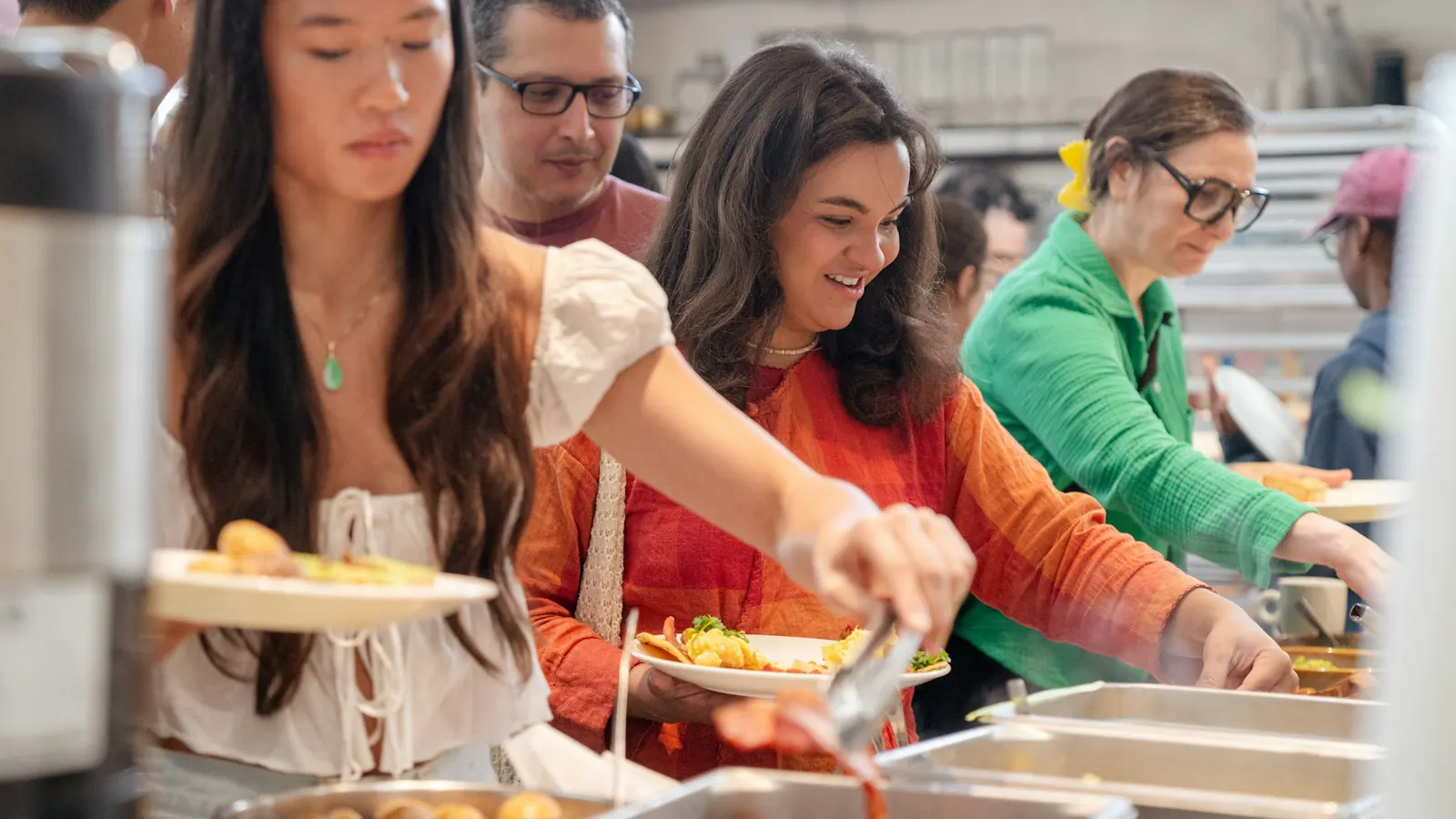
The brass band is running its spaghetti dinner. Three hundred and twenty covers, two sittings, a child portion next to an adult one, and a vegetarian dish for whoever asks. Half the tickets go through Facebook, the musicians sell the other half to family and neighbours, and the twenty helpers in the kitchen eat for free. It used to be a spreadsheet, a shoebox full of twenty-euro notes and a treasurer tallying at the door all evening.
How it goes
Step 1
You put the dinner online in ten minutes
Two sittings, three dishes, each with its own price and its own number of places. You share one link in the Facebook group and in the club newsletter.

Step 2
Members order on their phone and pay straight away
They get their tickets in their inbox, with the sitting and the number of portions on them. The money lands in the association's account, not in ours.

Step 3
The helpers are on the list for free
Whoever helps in the kitchen or at the tables gets a zero-euro ticket. It counts towards your numbers, so you always know how many portions are left — but not towards your ceiling, because free tickets are always unlimited.

Step 4
In the evening you scan at the door
Two volunteers with their own phones: green means in. A ticket that has already been scanned turns red — and the kitchen knows exactly how many plates are still to come.

Why it fits here
Nothing per ticket sold
No commission and no amount per ticket. What a ticket earns belongs to the association; that is precisely the money that pays for the instruments.
Staying free really works
The free plan carries up to 100 paid tickets per event, for as many events as you like, and free sign-ups are always unlimited. If one dinner goes over that, you pay for that one event on its own: no subscription and no trial period.
The money lands in your own account
You connect your own payment provider. A member's payment goes straight to the association's account; we are not in between and we take nothing off it.
Volunteers learn it in two minutes
The scanning app runs on the phone they already carry, even without decent signal in the parish hall. You give someone scanning rights without opening up the rest of your data.
You only need one list
Paid tickets, free tickets for the helpers and every scan at the door end up in the same list. At the end of the night you know exactly how many plates went out.
The sum
In our example, at least €170.00 a year stays in your own till.
What it costs
300 paid tickets at €25.00 each: €7,500.00 going through your own till.
A dinner of three hundred covers is an ordinary year for a brass band, a scout group or a parents' committee. With a platform that charges per ticket, that comes straight off the proceeds.
With a platform that charges per ticket
€189.00 to €384.00
With us, the Free + 1 event paid separately at €19.00 plan, per year
€19.00
All amounts are excluding VAT and per year. The rates we compare against are the going per-ticket rates in this market; we charge a fixed amount and nothing per ticket.
Frequently asked questions
Can we also take cash at the bar or at the door?
Yes, with the till. You ring up the sale on a tablet or phone, in cash or by card, and it lands straight in the same count as the online sales. That keeps your capacity right down to the last portion. The till is part of the paid plans.
Does scanning work without internet in the hall?
The scanning app keeps working when the network drops and syncs as soon as there is a connection again. A queue at the door should not stall because the hall wifi gives up.
We only run two evenings a year. Do we pay for twelve months?
No. If every event stays under 100 paid tickets, you pay nothing. If one evening goes over, you pay for that evening on its own. And if you do need a plan for one busy season, you then pause it for up to 9 months a year, with no billing in the meantime.
What if we pass the ceiling halfway through selling?
Selling simply carries on. You get a notice and 14 days to pay for that one event on its own or to choose a plan. Your sales never stop without warning.
Get started
Put your next dinner online and see for yourself how it runs. You need no card details to start, and a one-cent test payment shows you what your members receive before you share the link.
In the guide
Worth knowing before you start
The handful of terms that come up most often in this line of work, explained plainly.
- Event registration Event registration is the difference between hoping people turn up and knowing who they are before they do.
- Free tickets A free ticket is still a place in a room, which is why an event that charges nothing needs a list just as badly as one that charges.
- Ticketing without commission Commission on ticket sales takes a share of the reason you held the event, and for a volunteer organisation that share is the whole margin.
- Ticket sales Ticket sales cover everything between the moment someone decides to come and the moment a valid ticket is checked at your entrance.